The residents of Fukushima Prefecture have been suffering from the effects of a nuclear disaster since 2011. The disaster occurred on the east coast of Fukushima Prefecture. Enormous amounts of radionuclides were released from Tokyo Electric Power Company Fukushima Daiichi (TEPCO-F1) Nuclear Power Station because a hydrogen explosion caused by the tsunami produced by the Great East Japan Earthquake on March 11, 2011, caused the power station’s control system to malfunction. A radioactive plume (air containing radionuclides) was dispersed, causing anxiety among the two million residents of Fukushima Prefecture, and hence, many people had to be evacuated. As the radioactive plume contained radionuclides with long half-lives, the effects of the nuclear disaster will persist long into the future.
Now, radiological protection systems, which are designed to help the residents of Fukushima live comfortable and healthy lives, are being run by the Japanese government. Advice regarding protection against radiation has been provided, and large amounts of radiological information has been published. However, many residents have occasionally been unsettled by confusing information and/or misinformation because the dynamics of radionuclides and the effects of low dose-radiation on health are complicated.The residents of Fukushima Prefecture need to improve their information literacy to obtain accurate knowledge about the dispersed radionuclides and the effects of ionizing radiation on health.
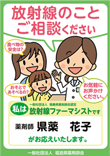
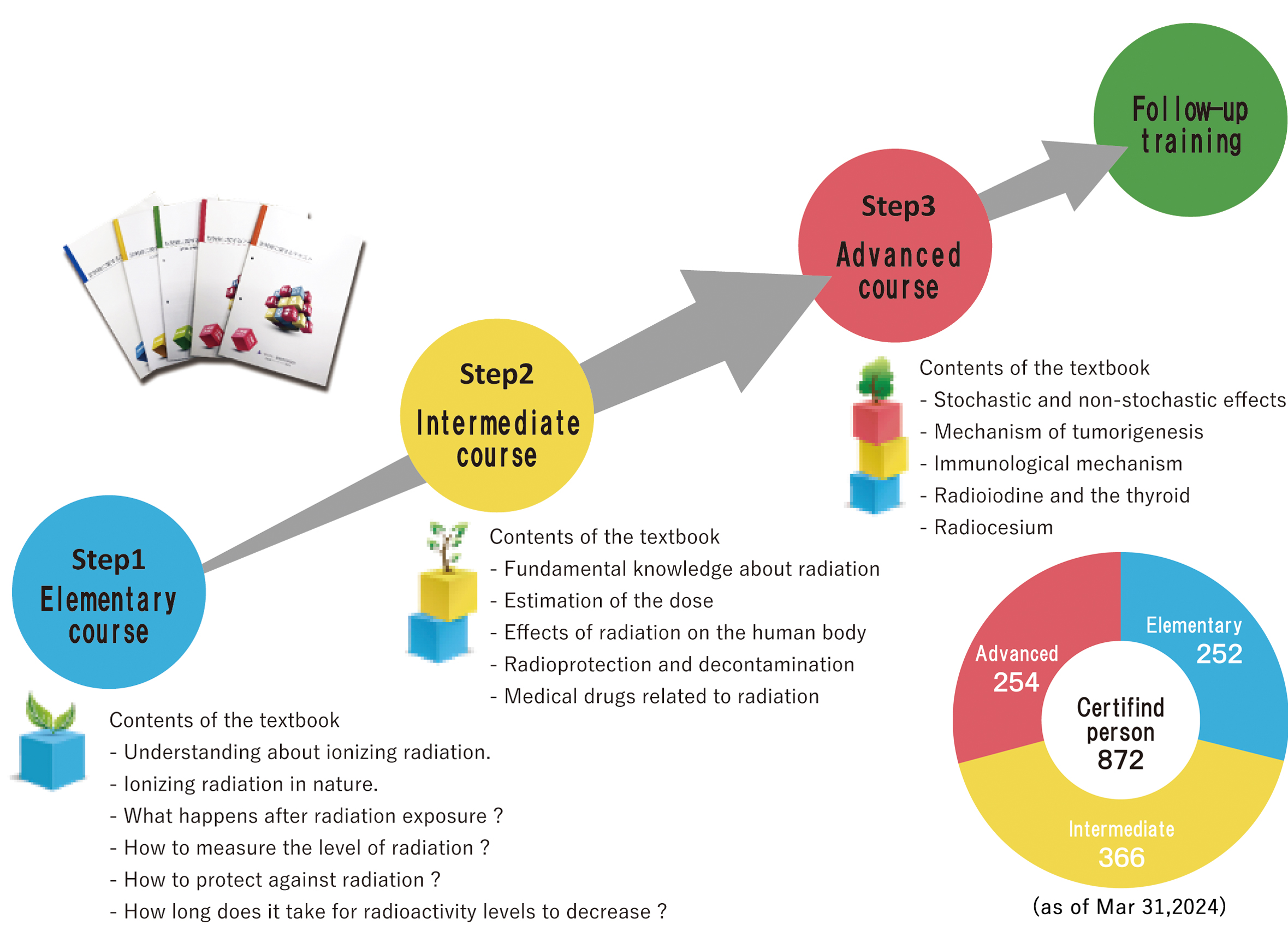
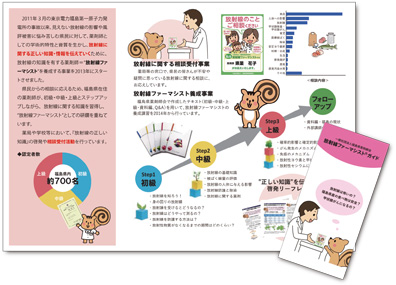
We decided to support residents with their daily activities by utilizing the skills of pharmacists living in Fukushima Prefecture. Pharmacists have to acquire fundamental knowledge about the fields of physics, chemistry, biology, and basic medical sciences in order to obtain their license. Therefore, by increasing their knowledge of radiological sciences, pharmacists will be able to support the residents of Fukushima Prefecture. In 2013, we launched the Radiation Pharmacist Project. As part of this initiative, we have developed a training course and prepared textbooks that will help pharmacists to study radiation and understand the latest situation regarding the aftermath of the nuclear disaster in the prefecture. As a result, more than 800 pharmacists have been trained and certified as “Radiation Pharmacists®”, and they have been answering questions from residents about radiation. Over 1,600 Q & As have been recorded and classified.
To contribute to the improvement of the health of residents, we will continue these activities in pharmacies and schools in Fukushima Prefecture.
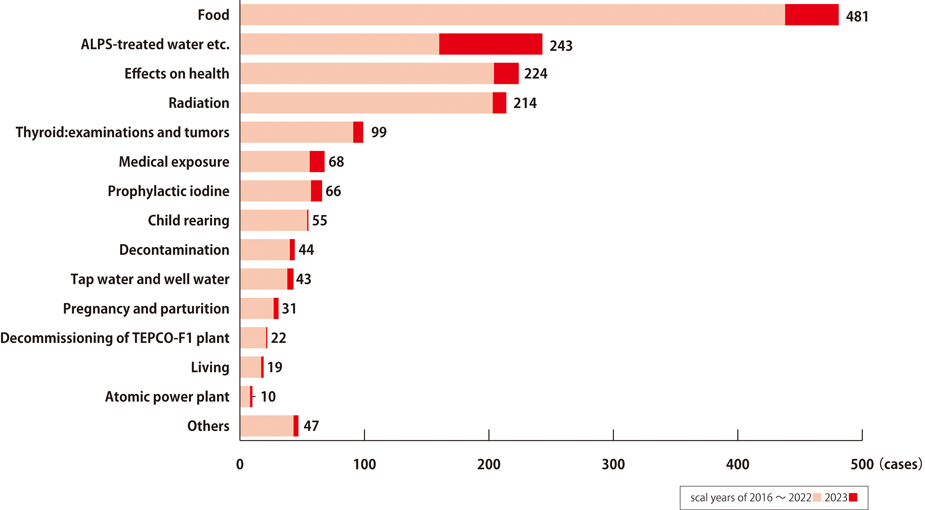
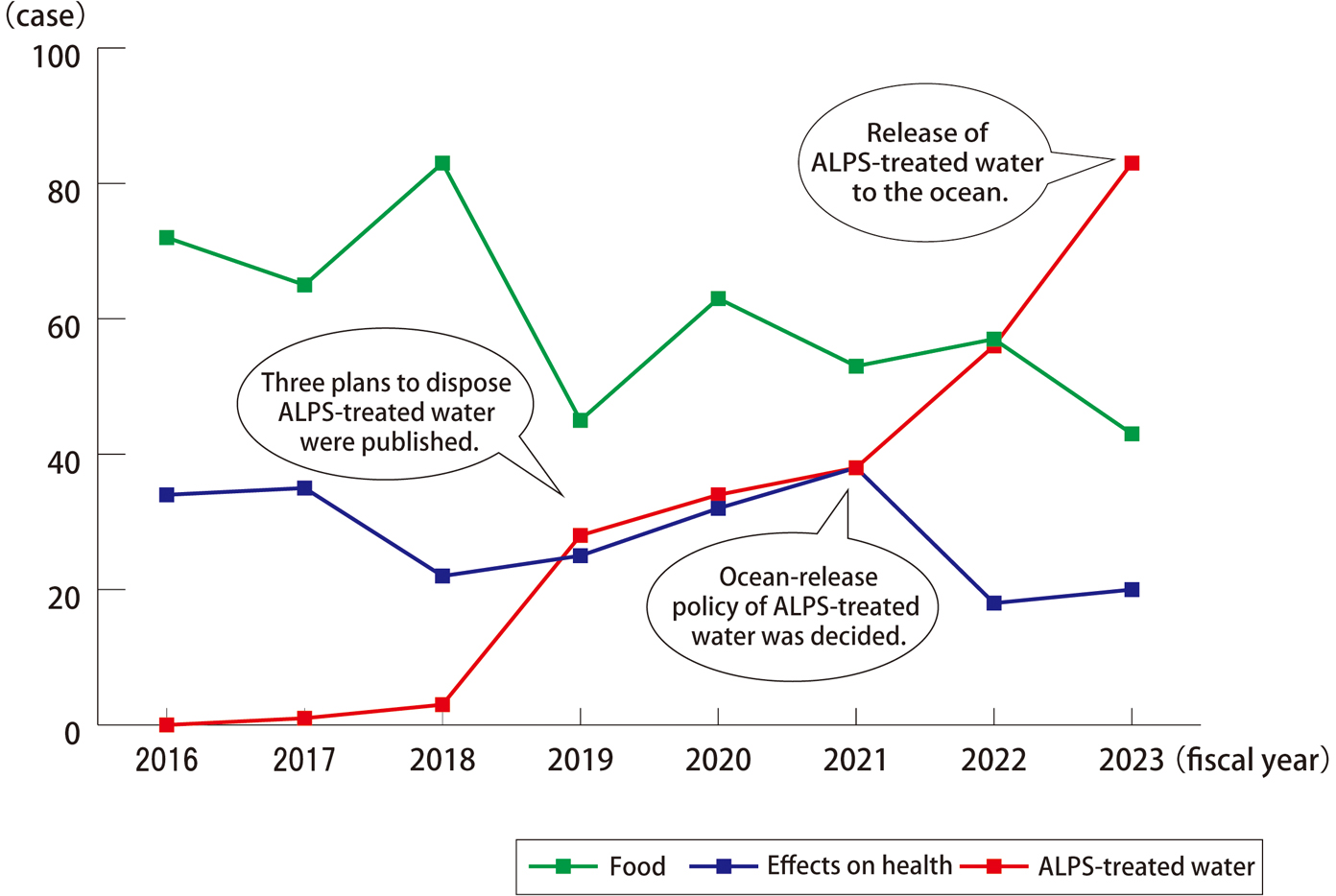
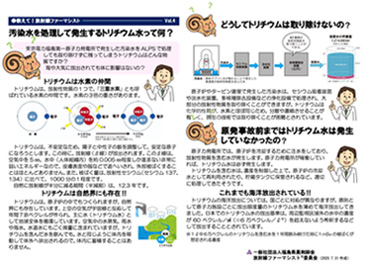
A.Tritium is generated by cosmic ray in natural atmosphere, and the most of it is converted to “Tritium water” by binding with oxygen. Thus, any water in the earth contains a faint amount of tritium water. Tritium is also generated in reactor of the atomic power plant artificially. There is no difference between the natural tritium and the artificial one.
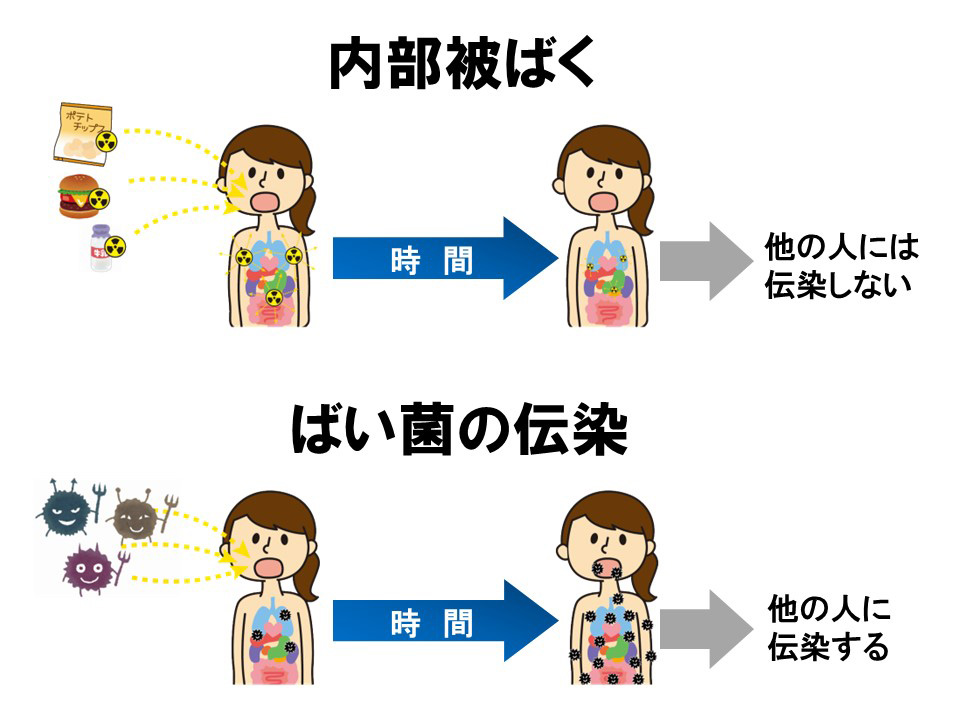
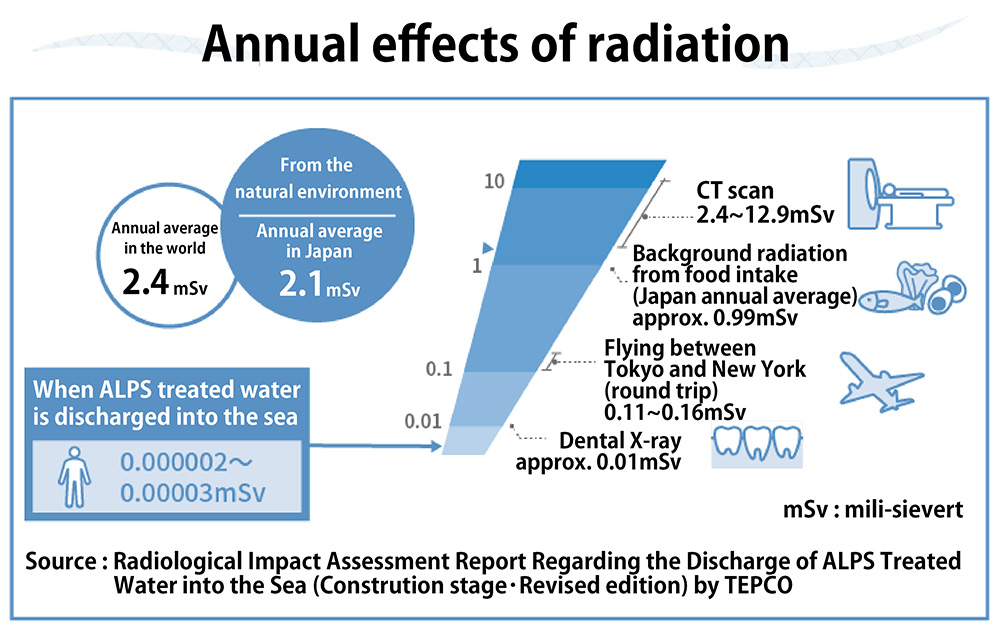
Tritium is a radioactive nuclide radiating beta ray and its physical half-life is approx. 12 year. But the energy of beta ray is very low, so the ray is blocked by 5mm of air or a piece of thin paper. Because this beta ray can not permeate human skin, the effects of tritium beta ray by external exposure are ignorable level.
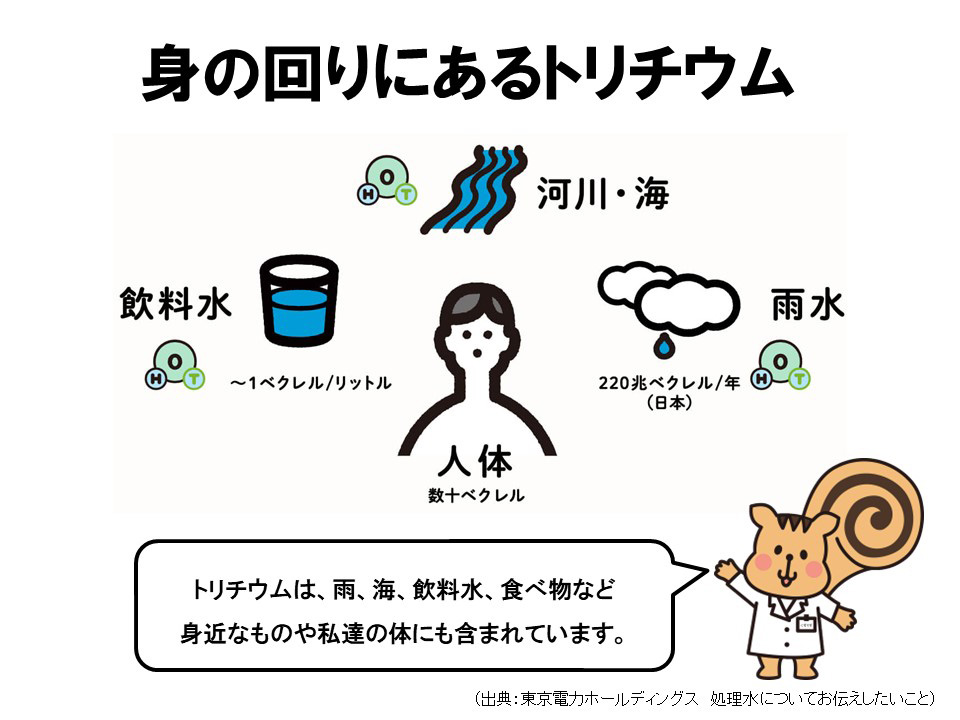
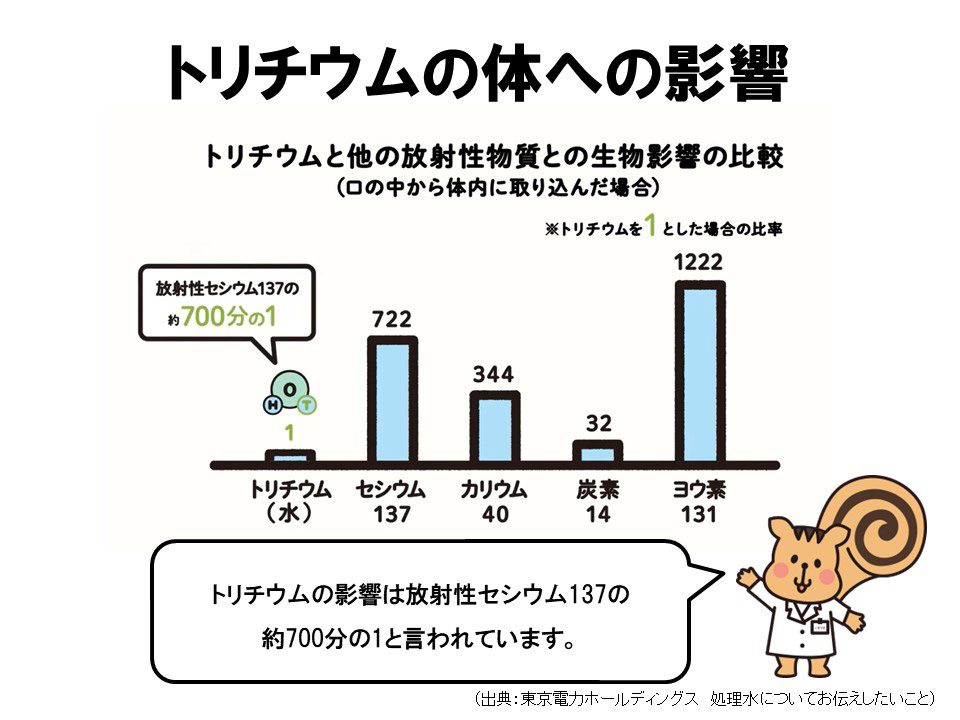
We always take in tritium from drinking water, and harbors tens Bq of tritium naturally in our body. Ingested tritium water are excreted from the body with the biological half-life of approximately 10 days. Health effects of tritium water are faint level, as ICRP has been estimated that the committed effective dose coefficient of tritium water is 0.000018μSv/Bq. For example, the level is only 1/344 of potassium 40(0.0062μSv/Bq in the coefficient), one of natural radionuclide.
It has announced that ALPS-treated water is discharged into the ocean after its dilution with sea water until 1/40 level of the domestic regulation limit. Therefore the authority estimated that the health effects after the discharge are 1/70,000 to 1/1,000,000 levels of exposure with natural radionuclides.
A. I will explain published information about the ALPS-treated water and the plan how to release it into the ocean. Any water contaminated with various radionuclides in TEPCO-F1 plant is isolated and pooled as “radioactive waste water” in the plant. Government decided to release the water after decontamination to the ocean, similar to other nuclear plants in the world. Other than tritium, all the radioactive nuclides generated in TEPCO-F1 are removed using a decontamination plant of Advanced Liquid Processing System (ALPS). When the concentration of radionuclide is below the accepted level (called as “notification concentration”, e.g. in the case of 137Cs, 90Bq/L), the waste water is defined as the “ALPS-treated water.” The ALPS-treated water still contains a certain amount of tritium, because it is impossible to remove any tritium physically. Because WHO guideline defines that tritium in drinking water should be below 10,000 Bq-tritium/L, the ALPS-treated water is diluted with sea water until tritium concentration becomes far below the guideline level, eg. below 1,500 Bq/L. After that, the diluted ALPS-treated water is released into the ocean, as TEPCO announced. Limit of total mass of released tritium will be less than 22 trillion Bq per year, based on the fact that TEPCO-F1 plant released 22 trillion tritium every year before disaster in 2011. TEPCO and the government announced that all the operations in TEPCO-F1 will be processed carefully, and that follow-up monitoring of the dispersion of released tritium in the ocean will be planned.
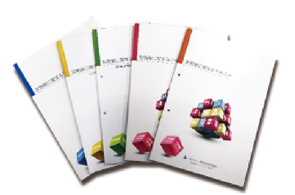
Three types of training courses, “elementary”, “intermediate”, and “advanced” are held every year, and pharmacists chose an appropriate course based on their knowledge level about radiation. Each of the courses involves the use of original textbooks. Pharmacists that successfully complete a course are certified as a Radiation Pharmacist® of the corresponding level. Pharmacists can raise their levels by attending the relevant training course. The advanced Radiation Pharmacist® should be updated by attending the follow-up training within 3 years. Since 2023, we have organized follow-up training courses for all levels of the Radiation Pharmacist® to support them to get the newest information and knowledges.
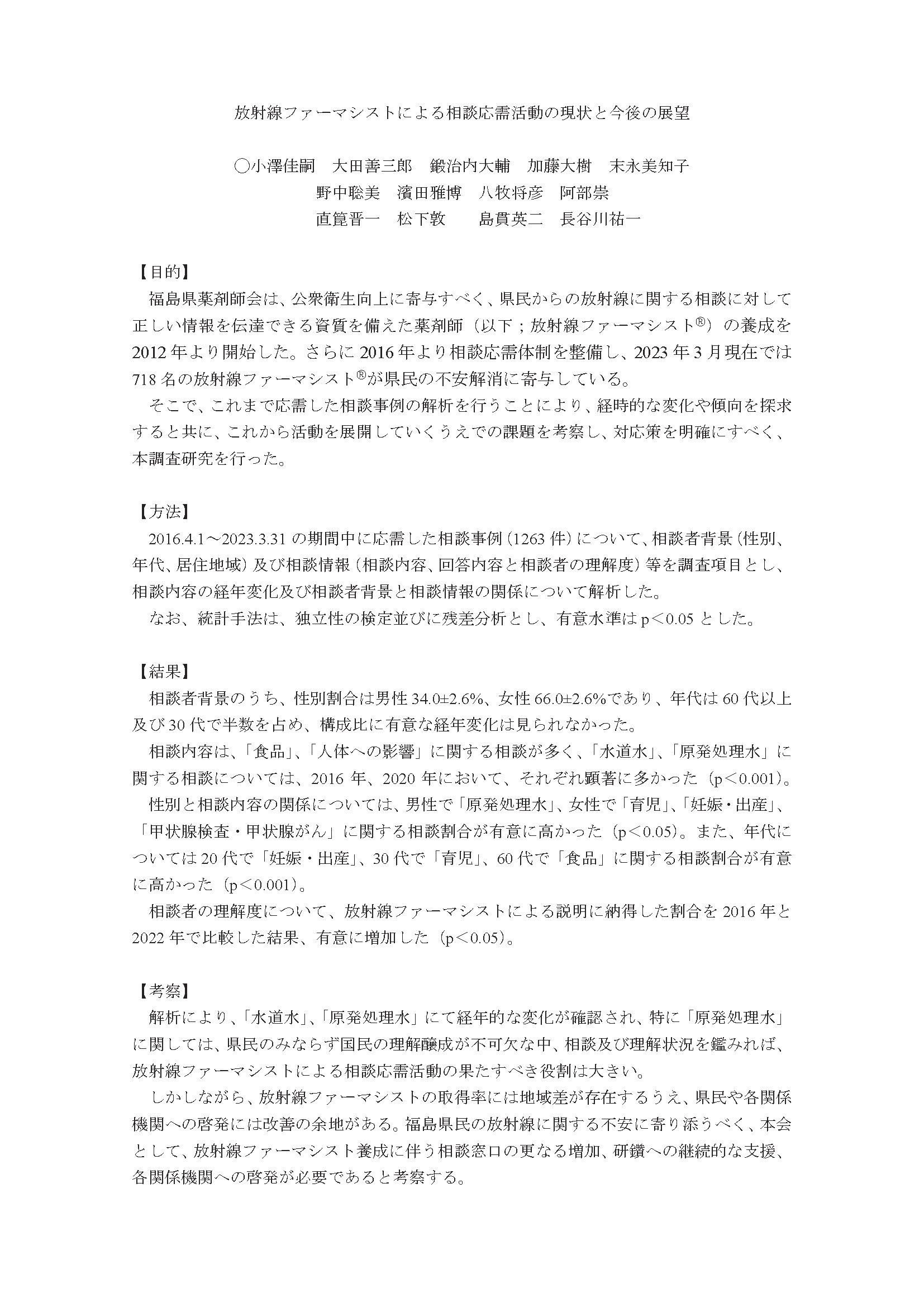
Overviews of our training project of Radiation Pharmacist® by us have been orally explained in the presentation at the 48th annual academic conference of Japan Pharmaceutical Association in 2015. Since 2019, some activities of Radiation Pharmacist® project have been presented annually. In 2023, we gave an oral presentation entitled as “Current situations and issues of the consultation by Radiation Pharmacist®”.
As a member of medical team, Radiation Pharmacist® has participated in the annual nuclear emergency drills organized by Fukushima prefecture since 2015.
Records of activities of Radiation Pharmacist® in 2022 nuclear emergency drill are as follows:
Purpose:To verify effectiveness of “Fukushima prefectural wide area nuclear disaster evacuation plan” and “Naraha town’s nuclear disaster evacuation plan”. To train the prefectural and town officials, and medical staffs for the evacuees to improve their skills with attending the residents of Naraha town. To announce the prefectural action against nuclear disaster.
Supposed scenario: Declining of the water level of the pool for spent nuclear fuel was identified in No.1 plant of TEPCO-Fukushima-1 after the earthquake in the coast of Fukushima Pref. After that, the water level dropped rapidly, and the situation progressed to “intra-plant emergency state (situation of article 10 of Act on Special Measures for Nuclear Disasters.)”, then to “whole area emergency state (situation of article 15 of the Act)”.
Report of actions in the medical team:
Medical support base was set up, then medical doctors and paramedical staffs were congregated from related organizations. Medical treatments were performed for supposed sick and wounded evacuees.
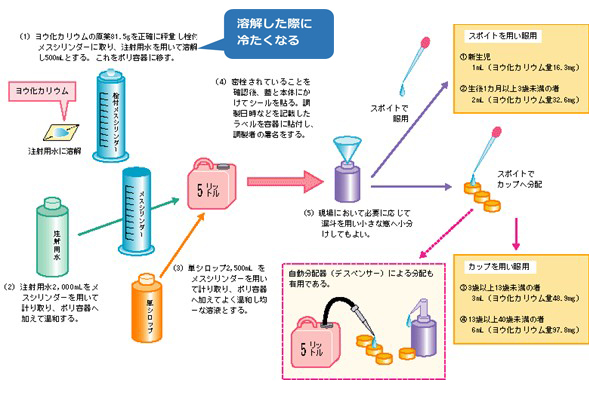
Radiation Pharmacist® prepared stable iodine liquid medicine, support residents in taking water that is mimicking the stable iodine based on medical doctor’s advise, and handed out stable iodine pills to supposed evacuees as needed.

2. Prophylactic effect of stable iodine.
The prophylactic effect of stable iodine is estimated to be maximum when the medicine is administrated within 24 hours before incorporation of radioactive iodine into the body. So, administration of stable iodine is recommended to take before incorporation of radioactive iodine. If you take stable iodine within 8 hours after absorption of radioactive iodine, prophylactic effect is expected to be 40% of maximum effect. When it passes 16 hours after incorporation of radioactive iodine, prophylactic effect of stable iodine cannot be expected. Stable iodine is no prophylactic effect to other radioactive nuclides.
3. Adverse effect of stable iodine
Adverse effects such as skin rash, headache, nausea, diarrhea may occur with low frequency, and occurrence of severe adverse effect is rare. If you feel sick, please call the staffs, then medical doctor or paramedical staffs will support you.
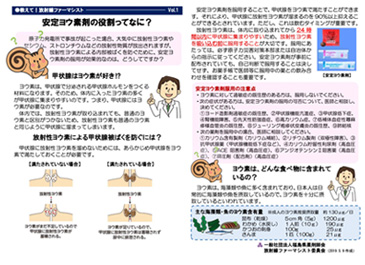
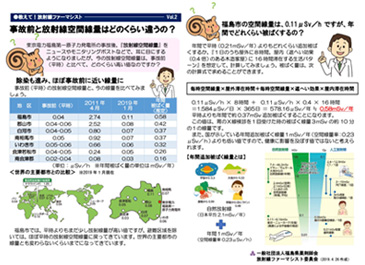
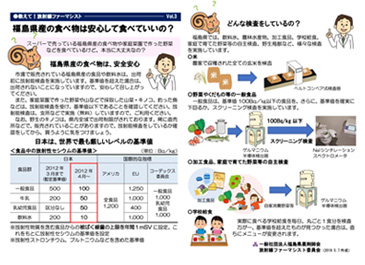
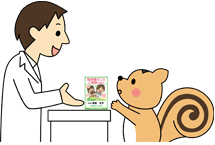
The leaflet “Tell me, Radiation Pharmacist” aims to provide accurate intelligible information about radiation to the prefecture’s residents. “About the Radiation Pharmacist” introduces the concept of Radiation Pharmacists and the associated training system because Radiation Pharmacists can help residents and schools with activities in Fukushima Prefecture. These leaflets are written in Japanese only.


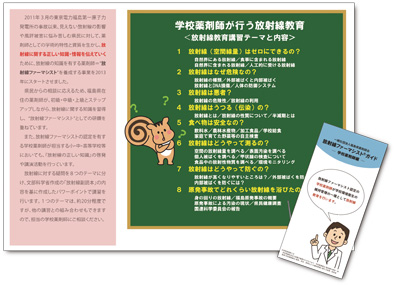
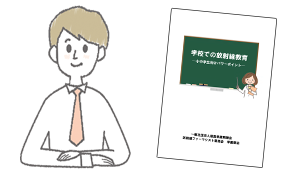
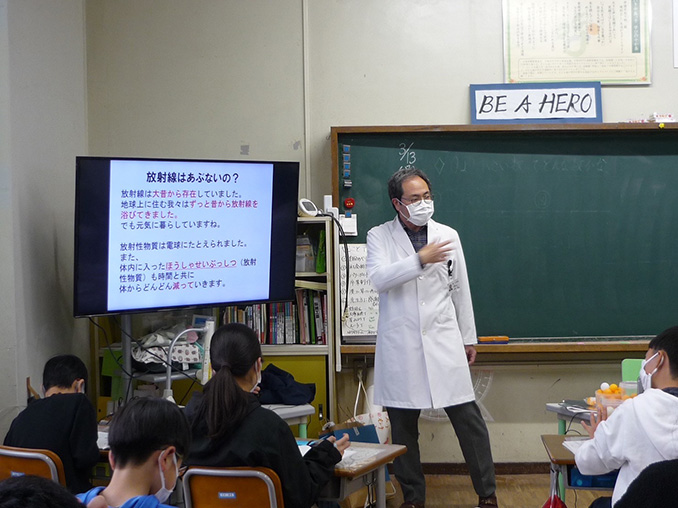
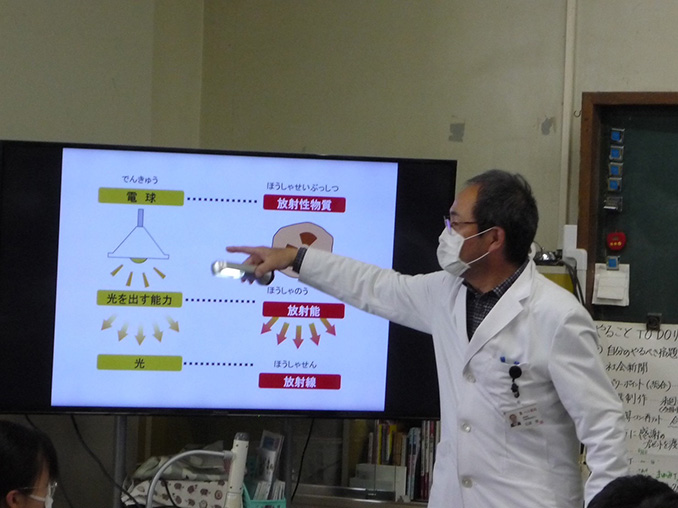
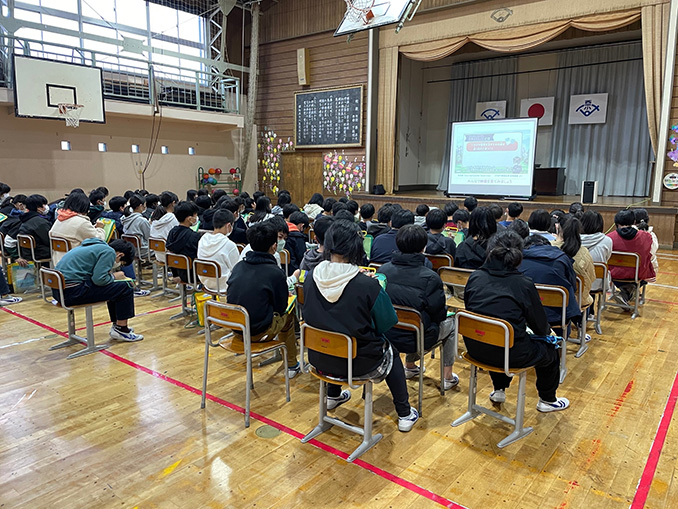
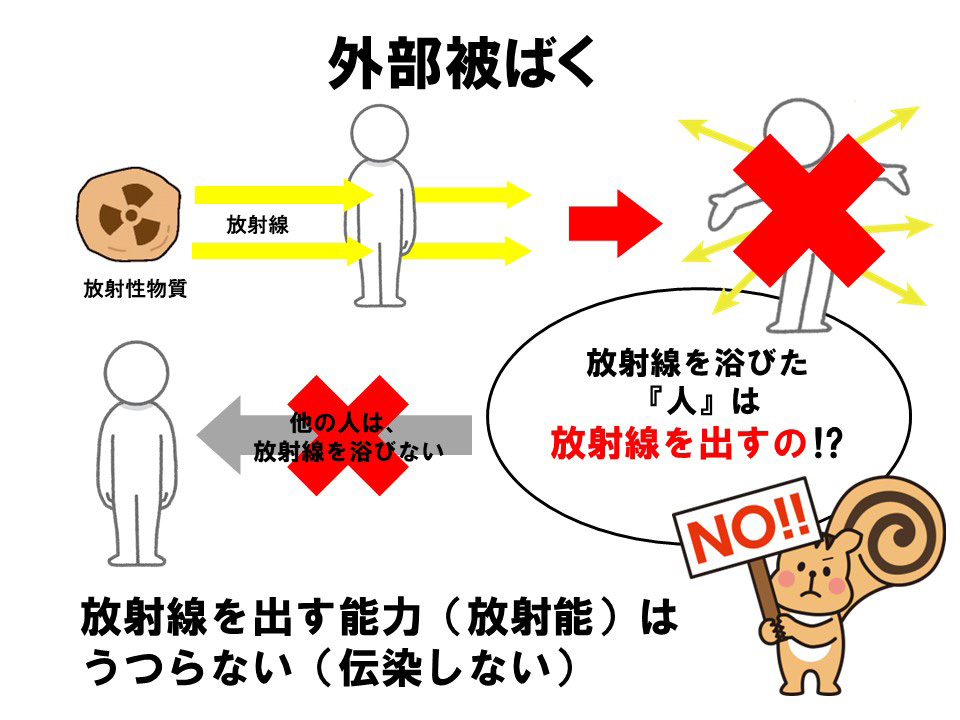
Together with anti-drag education in school children, radiation education by school pharmacist is recommended. To support the radiation education, we have prepared 10 pptx files. Using the files, school pharmacists with certificated Radiation Pharmacist○R are teaching in schools in Fukushima Prefecture.